
Mooring Solutions
Our time-tested designs and manufacturing experience ensure that your buoys stay afloat, and your vessels and equipment stay safely moored.
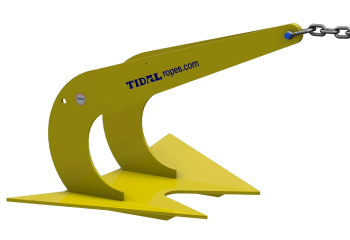
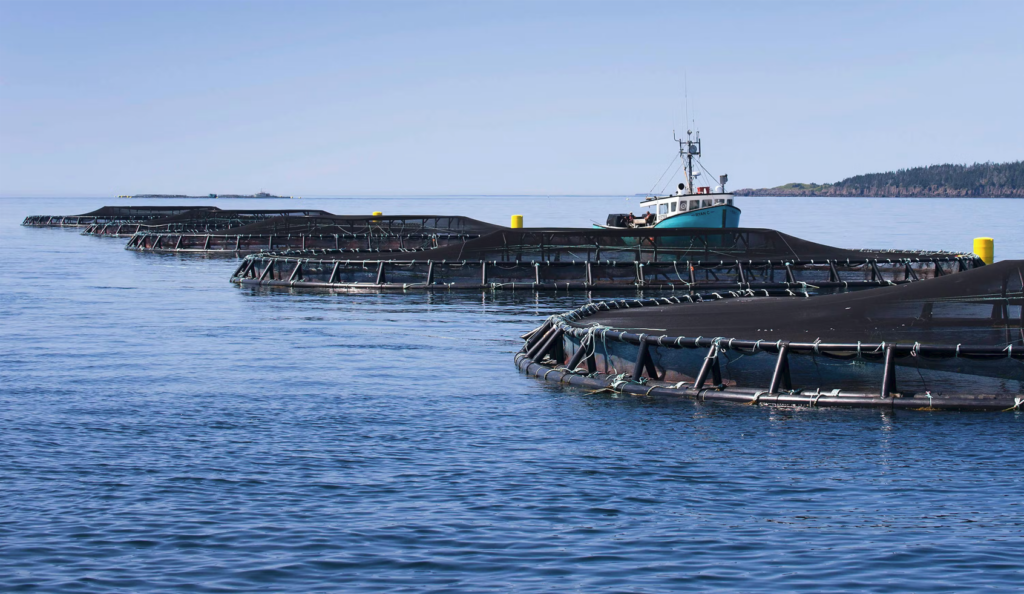
We provide a comprehensive range of mooring solutions including equipment, anchors, chains, buoys, ropes, and hardware. Our experienced team will collaborate with you and your engineers to develop cost-effective mooring systems tailored to your needs. We offer proven components for both simple moorings and large-scale commercial cage systems in saltwater and industrial water treatment infrastructure.
Featured Mooring Solutions Products


Services
Mooring System Design Assistance & Review
Guarantee the safety and efficiency of your marine operations with our comprehensive Mooring System Design Assistance & Review services. Our team of experienced professionals collaborate closely with you to create customized mooring solutions that meet your specific needs, providing stability, reliability, and compliance with industry standards.
Industries
Tidal Marine services a wide variety of clients, ranging from private companies and public organizations to individual customers.
Frequently Asked Questions
How long should my mooring line be?
Ideally, the mooring line is 2 to 3 times the depth of the water at highest high water. This ratio of water depth to mooring line is called scope. A high scope allows for the least hydraulic force to be applied to the anchor block as the buoy is far away from the anchor. However, sometimes this is not practical as the length of the mooring line allows the buoy to move too far away from its anchor position. This movement is referred to as the watch circle. If the watch circle causes the buoy to move too far out of position or for it to hit shore or another floating object, it will need to be reduced. The lower the scope, the more wear on your mooring line and the larger your anchor block should be. Your mooring line must be able to be supported by the buoy selected.
How heavy should my anchor block be?
The size of the anchor block is determined by the buoyancy of the buoy, the type and length of mooring line being used, and the environmental conditions. The anchor block ideally has a submerged weight that is 3 times the buoyancy of the buoy minus the mooring weight. However, this can result in some very large anchor blocks. This is where environmental conditions come into play. If the location allows for a large scope of the mooring line, a smaller anchor block can be used. Also, if the buoy location is sheltered without large swells, the anchor can be made smaller as well.
What determines the size of the buoy needed?
The size of the buoy is determined by two main factors: water depth and who the primary user is. The deeper the water, the heavier the chain mooring is, and a large buoy is needed to support the weight. Hybrid mooring lines made from rope and chain can help mitigate this. When the primary user is a container ship, a large buoy is needed so the buoy can be seen from far away, providing the ship with adequate time to make adjustments. The large buoy also provides a higher focal plane for marine lanterns for nighttime visibility.
How do I make sure my buoys are compliant with local regulations?
When installing a buoy, you should make sure you are following the local regulations. There are often conditions around where you can place a buoy, as well as its size, shape, and colour, depending on the application. You may also be required to provide special decals and reflective tape to the buoy. Our team is available to help you select the right buoy to ensure compliance. You can contact your local Coast Guard or Transportation Agency before purchasing a buoy.
Frequently Asked Questions
What distinguishes "Individual Drop" from "Continuous" Mussel Socking systems?
Tidal Individual Drop socks encase mussel seeds, providing a mesh substrate for mussels to attach via byssal threads. These socks are commonly utilized in shallower mussel farming areas with greater water temperature variation or when suspended from floating rafts. On the other hand, Continuous socking systems employ a rope substrate where mussels attach themselves. Continuous lengths of seeded rope are hung in loops from surface buoys in deeper waters.
Why is grading mussel seed before "Grow-Out in Socks" beneficial?
Seed collection, de-clumping, and grading play a crucial role in reducing floatation costs, enhancing yield and product quality during harvesting, and widening the processing window for consistent market-sized mussels. Grading at the Seed stage, as opposed to only at the Harvest stage, significantly boosts yield and ensures consistency in the size of the harvested mussels.
Wire Oyster Cages or Aluminum Frame Oyster Cages: Which do you recommend?
Initially introduced in the late 2000s, Oyster Cages made from Polyvinyl Chloride (PVC) dipped metal wire were designed to hold 4 or 6 oyster growing bags. These cages, supported by two larger floats, allowed for higher densities than the original Floating Bag systems. However, PVC coated wire was found to deteriorate over time, leading to the development of heavy-duty aluminum frame cages. Fabricated by bending and welding aluminum round bar, these durable cages are replacing PVC wire mesh cages due to their resilience.
Square or Diamond mesh Oyster Bags: Which is recommended?
Both Square and Diamond mesh bags have their advantages and drawbacks. Square mesh bags are prevalent in North America due to farming systems requiring a rectangular shape. On the other hand, Diamond mesh bags, with their stronger structure, tend to last longer. However, some farmers consider the sharp edges on the openings of diamond mesh bags a potential issue.