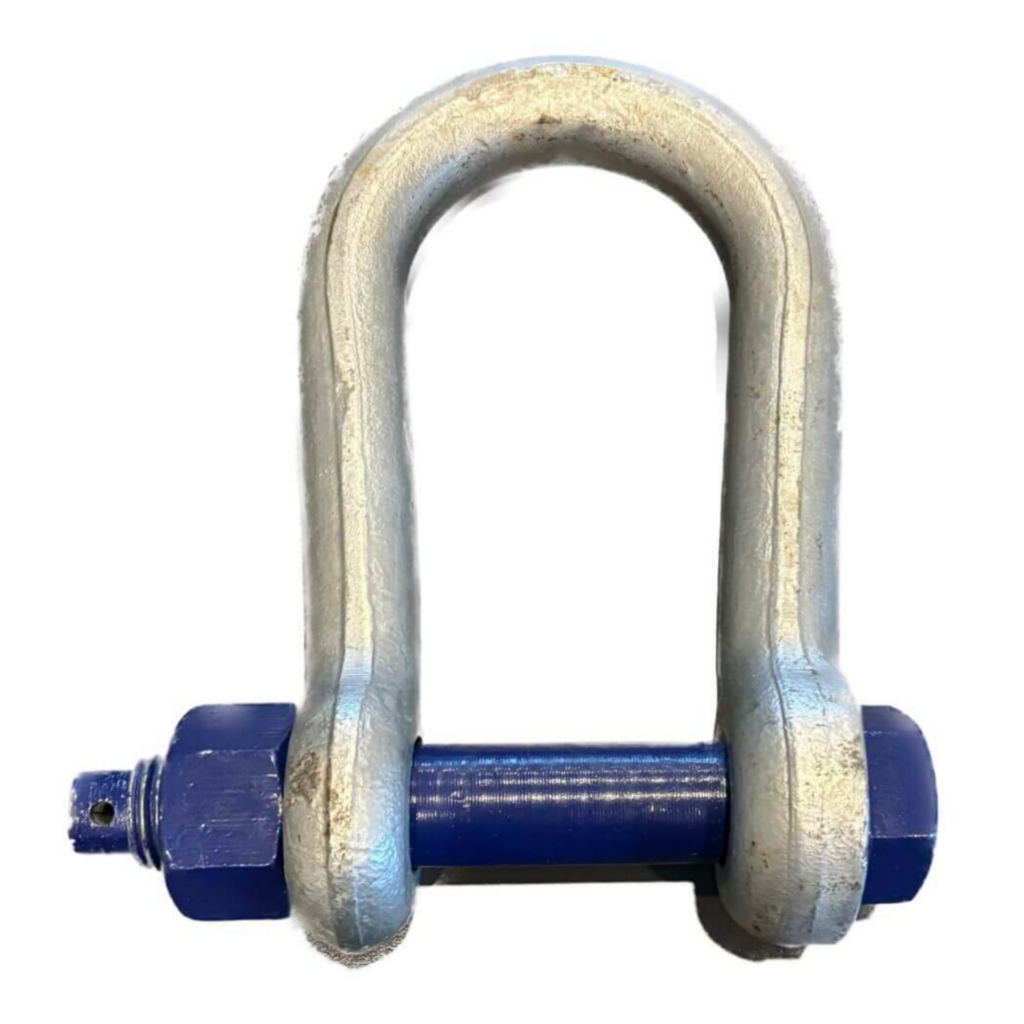

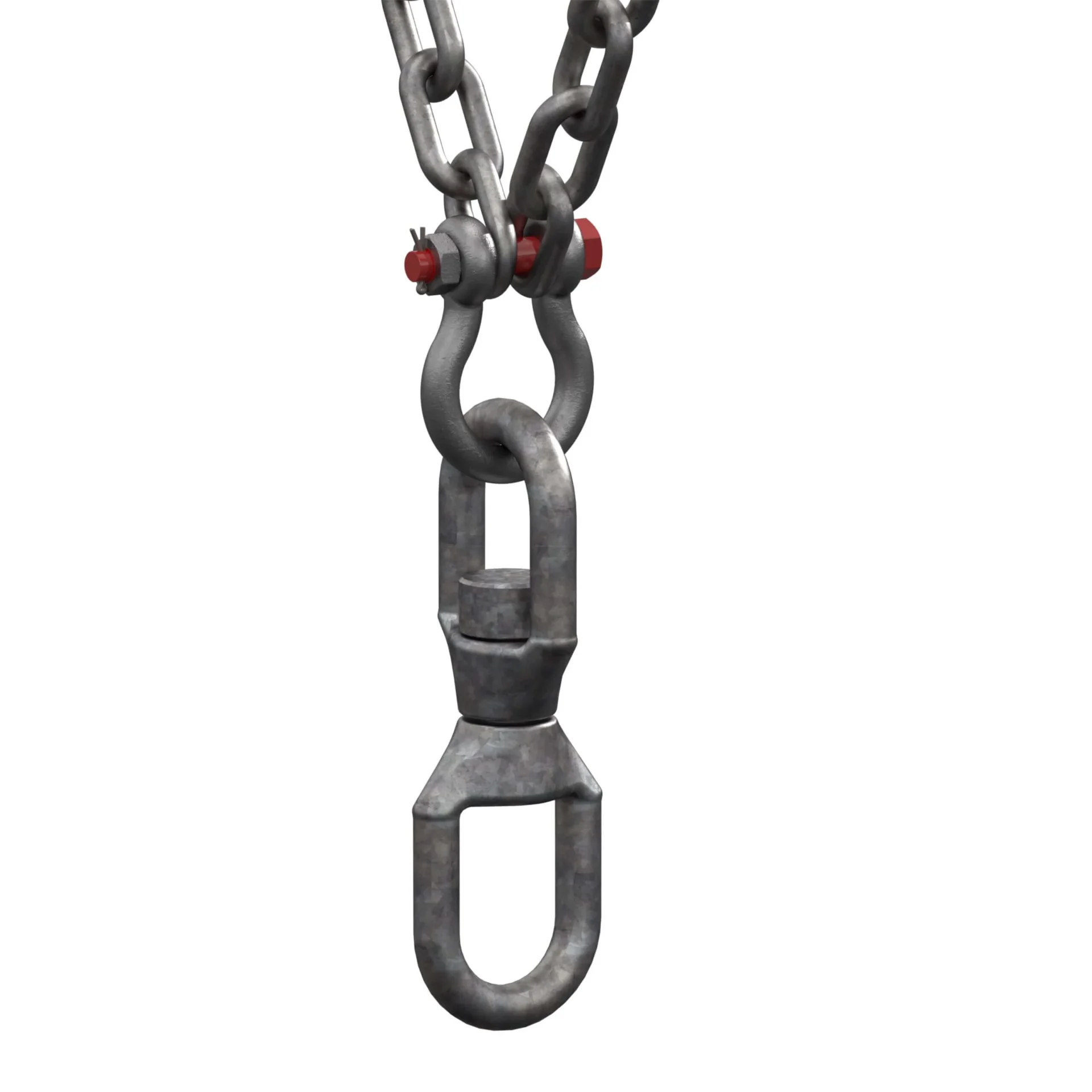
Swivels help reduce line twisting and tension in mooring setups, ensuring smooth movement and extending the life of your mooring system. The primary purpose of a swivel is to allow two connected components to rotate independently of one another while under tension. The swivel manages the kinetic energy of a buoy constantly rotating in the wind and tide. As a buoy spins on the surface, it creates “torque” in the mooring line. Without a swivel, this twisting would cause the chain links to “kink.” Once a chain is severely twisted, its tensile strength drops significantly, leading to failure. By allowing the buoy to move freely, the swivel ensures that shackles and rings aren’t being ground down by constant friction against fixed metal parts.
| Diameter (mm) | Total Length (mm) | Eye Inside Width (mm) | Eye Inside Height (mm) | MBL (kg) |
|---|---|---|---|---|
| 5 | 60 | 13 | 13 | 1,000 |
| 6 | 65 | 15 | 15 | 1,500 |
| 8 | 90 | 20 | 22 | 2,500 |
| 10 | 115 | 24 | 26 | 3,900 |
| 13 | 154 | 32 | 35 | 6,500 |
| 16 | 188 | 39 | 45 | 9,000 |
| 19 | 229 | 41 | 51 | 13,000 |
Thank you for choosing Tidal! Please be informed that your filter selection has been successfully registered. A sales team representative will be reaching out to you in the next few days to assist with your purchase.
Please fill out the form below so that we can get in touch with you.
We appreciate your interest in our products! A sales representative will be reaching out to you to discuss our range of products and catious configurations options. They will assist you in making an informed decision, helping you make the best choice for your specific requirements.
Please fill out the form below so that we can get in touch with you.